Author Archives: maryjane

photo-of-the-day

farm_romance_0563

Rewards from the Past

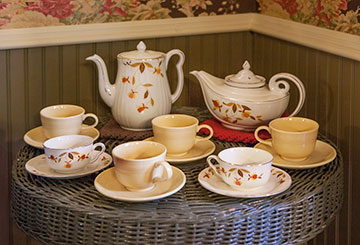
In the next issue of my magazine, we’re using a photo of one of my most precious heirlooms—my mother’s favorite—Jewel Tea dinnerware, collected piece by piece in the 1950s with credit rewards from Jewel’s household products delivery service.

Craft_Party_7961

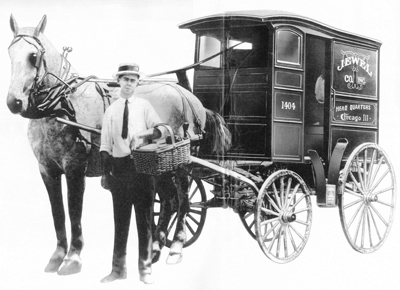
Jewel Tea was founded at the turn of the century in Chicago by Frank Skiff with just $700, a horse, and a wagon.

jewelwagon

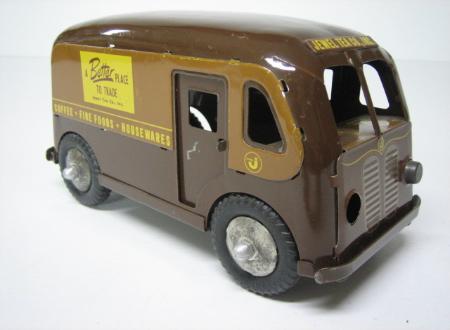
Frank sold coffee, tea, spices, and dry goods to area housewives. By the 1930s, Frank had turned his single delivery wagon into the Jewel Home Shopping Service, with a fleet of door-to-door salesmen in Jewel Tea vans who hawked groceries, cleaning supplies, clothing, cookware, tools, and more to housewives across the country.

jewel-tea-van

Jewel gave premium coupons with each purchase; when you had enough coupons, you could order any of the “premium items” from Jewel’s catalog, one of which was the Autumn Leaf china pattern. My mother collected two sets, one for everyday use and one for Sunday and holiday dinners, that came into the house piece-by-piece over the course of several years. As a little girl, I could see that the Sunday set was extra-special because it still had the lovely golden edges that had been worn off on our everyday set.

I also remember many an hour carefully pasting Green Stamps into a booklet and daydreaming of things to come from the S&H Green Stamp rewards catalog.

green-stamps

It was truly the stuff little-girl dreams were made of: pages and pages of color photos of dolls and toys for me and my sister, and everything from knickknacks to furniture and appliances for Mom. Not to mention bows-and-arrows, tools, and more for Dad and the boys, and even a big-ticket trip to Disneyland for the whole family!

green-stamps-booklet

S&H Green Stamps were a staple of American culture from the 1930s until the late 1980s. The Sperry & Hutchinson Company sold their stamps and redemption books to retailers—from supermarkets to gas stations to department stores, every purchase came with a bonus of green stamps. Some retailers offered more green stamps per dollar—one more reason to bring shoppers into their stores. Shoppers collected the stamps and pasted them into stamp books, which could then be redeemed from the S&H Ideabook rewards catalog or at S&H redemption centers, which numbered over 600 by the mid-1960s. Eighty percent of American households collected the stamps. At their height, S&H printed three times as many stamps as the U.S. Postal Service and their Ideabook was the largest publication in the U.S. (I didn’t remember that the name of the catalog until I saw this graphic, but now I wonder if all those days of dreaming were firmly lodged in my subconscious, only to pop to the surface when I named my first book MaryJane’s Ideabook, Cookbook, Lifebook.)

To a frugal family of seven, these “rewards programs” fueled our fantasies even more than the Sears catalog … we could dream of owning beautiful things without any extra cash outlay. A true reward for shopping smart. And now, precious heirlooms from days gone by.


photo-of-the-day

farm_romance-7908

photo-of-the-day

farm_romance-7531

photo-of-the-day

farm_romance_0494

Hear Ye!

Welcome New Sisters! (click for current roster)

Merit Badge Awardees (click for latest awards)

My featured Merit Badge Awardee of the Week is … Joanna Green!!!

Joanna Green (Joanna, #5965) has received a certificate of achievement in Garden Gate for earning a Beginner Level Weather Merit Badge!

“When researching for this badge, I tried to steer away from the easy, sometimes unreliable, method of Googling for answers and use a book that has been handed down to me from my father and his father before him. It’s called Outdoor Canada and was published by Reader’s Digest in 1977. However, I did break down and acquire a few facts from www.weatherquestions.com.

Here’s what I came up with:

• All weather occurs inside the atmosphere, which is 13 miles thick from the equator and 5 miles at the poles. I was actually amazed at how thin the atmosphere actually was. As the Earth revolves around the sun, the sun warms the ground. This heat radiates off the ground and warms the air within the atmosphere. The sun also evaporates water from the lakes, rivers, and various other water sources. The water vapours are drawn up into the air and eventually form the clouds. Later, this will fall as some sort of precipitation—rain, sleet, snow, etc.

• Atmospheric pressure is what the air actually weighs. The weight of the air varies at different points on the Earth simply because cold air is heavier than hot air. This creates high and low pressure areas. In a high-pressure area, the air is gradually sinking. As it sinks, the sun reflecting off the Earth warms this air and makes it able to retain moisture. This warm air evaporates the clouds that cross its path and the skies become clear. In a low-pressure system, the air is gradually rising. As it rises, it expands and cools making it difficult to retain moisture. Lows often form between the highs causing storms.

• A barometer measures the atmospheric pressure or the weight of the air. When the barometric pressure decreases, it predicts a storm, whereas rising barometric pressure predicts good weather.

• Wind is caused when air flows from a high pressure point to a low pressure point. High pressure winds circulate in clockwise fashion and low pressure winds circulate counter clockwise. The closer the high and low pressure areas are together the stronger the wind will be when the air flows from the high to the low. The friction from the Earth typically slows down the wind the closer it gets to the Earth. Wind is typically a good thing since it transports excess heat away from the surface of the Earth to cooler regions. In some cases, as we all know, wind can cause great havoc. Hurricanes and tornadoes are the worst-case scenarios of uncontrollable winds. The winds of a hurricane are usually greater than 70 miles an hour and the diameter of this swirling air mass is 400 miles or more. A hurricane starts in the hot, moist air near the equator and as the Earth rotates, it draws more moisture into the growing storm, which eventually falls as torrential rain. The eye of the hurricane (a calm area) acts as the axle of a wheel for the storm as the wind propels this “wheel” north. The friction of the land slows the hurricane, but damage can still be caused by its trailing winds. A tornado usually occurs during a thunderstorm when the air is unusually warm in the lower atmosphere and cooler in the upper atmosphere. A tornado is a column of low pressure air that is about 200 yards in diameter and rotates at 300 miles an hour.

• Air masses are large areas where temperature and moisture are much the same throughout. The temperature and moisture levels of these masses take on the characteristics of the Earth’s surface below them. When these areas meet, they form fronts. Some of these air masses are composed of cold, heavy air and others are composed of warm, light air. When the cold air masses displace the warm air of another air mass, it creates a cold front. When the opposite occurs, it causes a warm front. In either situation, the weather usually becomes troubled and stormy.”

photo-of-the-day

farm_romance-8523

seeing eye …

horses? That’s right. Miniature horses are the newest trend in guide animals.

640px-Guide_horse

Photo by DanDee Shots via Wikimedia Commons

Guide horses have an average lifespan of 30 years, making them a good alternative to dogs in some cases. Although they necessarily live outside the house, they have superb eyesight and traffic instincts that make them good companions for sight-challenged rural folks.

The idea hatched in 1998, when Janet and Don Burleson of Kittrell, North Carolina, were riding horses in New York City and Janet noticed how traffic-savvy the horses were. At home, they had a miniature horse, Twinkie, who followed them around like a dog and even rode in their minivan. She thought to train Twinkie, and has since developed a rigorous, eight-month training program that results in the little helpers being able to go into shopping centers and grocery stores … virtually, everything a guide dog can do. They’re even taught to respond to 23 voice commands.

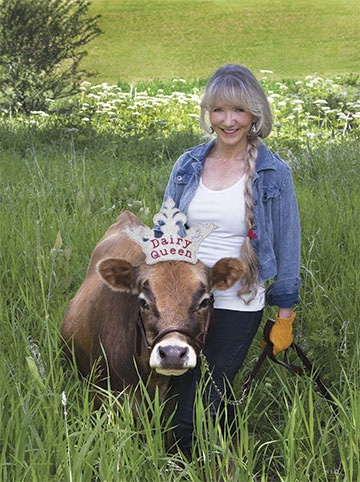
What’s next … miniature Jerseys?? Come on Etta Jane, I know you can do it!

etta-jane

photo-of-the-day

photo-of-the-day_tree

Treehouse Masters

I’ve discovered a little gem of a DIY television show, Animal Planet’s Treehouse Masters.

Now in its second season, Treehouse Masters is hosted by building visionary and “tree whisperer” Pete Nelson, a really likable everyman with a passion for trees. Pete comes from neighboring Washington state, where he and his wife, Judy, and daughter, Emily, own and operate Treehouse Point, a bed-and-breakfast near Seattle that boasts six guest-room treehouses. (You can also visit the property by taking a 1 1/2-hour guided tour of all the non-occupied treehouses on the property for just $18.)

Pete Nelson has been building treehouses for 20 years, starting with the one his dad helped him build when he was just 5 years old. Pete’s company, Nelson Treehouse & Supply, has now built over 200 treehouses in 6 countries. Treehouse Masters follows Pete and his lovable crew, including his twin 20-something sons, as they create “private escapes for those with a passion to reconnect with nature and awaken their inner child.” But if you think Pete’s treehouses are just for kids, think again. Some of Pete’s creations are self-contained living spaces including bedrooms, kitchens, and bathrooms. If you can dream it, Pete can build it. He’s even built a working recording studio high up in the trees.

irish-cottage-11-625x450

One recent episode had Pete visiting his former apprentice, Takashi Kobayashi (Taka), in Japan. Taka is now a treehouse master himself, recently creating the “Tree Dragon” treehouse, built for the child survivors of the 2011 Japanese tsunami. Taka wanted to create a space where the children could conquer the fear of nature the tsunami had brought to them and get back in touch with the beauties of the natural world. Through Pete’s conversation with Taka, some of it through an interpreter, we find that, regardless of the architectural antiquities that abound in Japan, there have never been treehouses built there—the word doesn’t even exist in the Japanese language. Because of Pete, the Japanese now have a word for these creative spaces … treehouse!

Pete also has a handful of books about treehouses, including this year’s Be in a Treehouse: Design/Construction/Inspiration. If you love the thought of living (or playing) in the trees, check out Treehouse Masters, Friday nights on Animal Planet.