Author Archives: maryjane

photo-of-the-day

farm_romance-5074

i see change

Oooh, I just stumbled upon a neat project! i sea change?

photo by Paolo Costa Baldi. License: GFDL/CC-BY-SA 3.0 via Wikimedia Commons

photo by Paolo Costa Baldi. License: GFDL/CC-BY-SA 3.0 via Wikimedia Commons

icey change?

ice-2501

It’s called the iSeeChange Almanac, and besides having a lovely website, it’s also a revolutionary undertaking.

Instead of trying to explain it to you, take three short minutes to watch this video:

Imagine the power of collaboration between citizens and scientists …

People like you and me watch the weather roll through our local landscapes, we soak up the sensations of seasons shifting, and we notice subtle changes in the environments we call home.

460px-Unidentified_woman_holding_gladiolus_at_Terra_Ceia_Island_Farms,_Florida

Photo by Florida Memory via Wikimedia Commons

“People know their own backyards,” Julia Kumari Drapkin, the lead producer of iSeeChange, told Treehugger.

So, who better to speak up and record the odd dry creek, an unusual bird flock, or a grove of suddenly ailing trees?

400px-A_dead_elm_tree_on_Skelston_Moor_-_geograph_org_uk_-_1725919

Photo by Walter Baxter via Wikimedia Commons

If the climate is changing on a grand scale, WE are the ones who recognize the minute clues beneath our noses.

The earth around us is like a second skin.

This is what the iSeeChange Almanac is all about. Unlike its charming predecessor, the long-loved Old Farmer’s Almanac, this evolving collective is meant to be continuously crafted by farmers, birdwatchers, gardeners, hikers, cyclists, ranchers, fishers, and casual observers of nature. It is interactive.

gardener_0186

And scientists are paying attention.

“My greatest moment is when NASA sent a climate scientist to a rancher,” Drapkin says.

Something is happening here, and we should all be a part.

Log in, pipe up, and keep the conversation going.

photo-of-the-day

1

photo-of-the-day

Flower1

photo-of-the-day

Flower2

photo-of-the-day

farm_romance-1966

Hear Ye!

Welcome New Sisters! (click for current roster)

Merit Badge Awardees (click for latest awards)

My featured Merit Badge Awardee of the Week is … Sharon Demers!!!

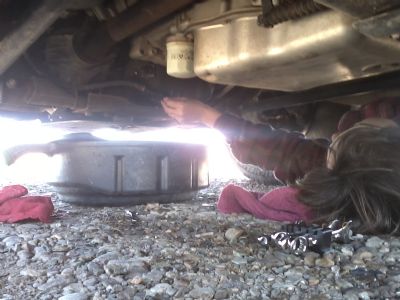
Sharon Demers (Calicogirl, #5392) has received a certificate of achievement in Make it Easy for earning a Beginner, Intermediate, and Expert Level Grease Chicks Merit Badge!

“I am familiar with checking oil level, coolant level, brake fluid, power-steering fluid, transmission fluid, and windshield-washer fluid. I also know how to check air pressure in my tires and fill as needed. I have kept a mileage record. In our GMC Diesel pick-up, the average miles per gallon is 17, 20 mpg on the highway.

I completed my first oil change.  My husband guided me step by step on what to do. Thankfully I didn’t get too dirty. In addition to changing the oil in our truck, I also challenged myself in replacing spark plugs, replacing spark-plug wires, and changing the engine coolant. Next on the list … tire changing!

I am grateful to now know how to do this on my own. I feel that this is a great accomplishment. Oh, and my honey was very gracious in taking my picture … not!

Thank you for this Merit Badge. It is a good reminder and teacher of being able to take care of one’s own vehicle.”

1227131207-01


photo-of-the-day

Snowline_Sunset

Bee a Helper

We care, and we talk, and we hope.

And, one day …

People everywhere begin to ACT.

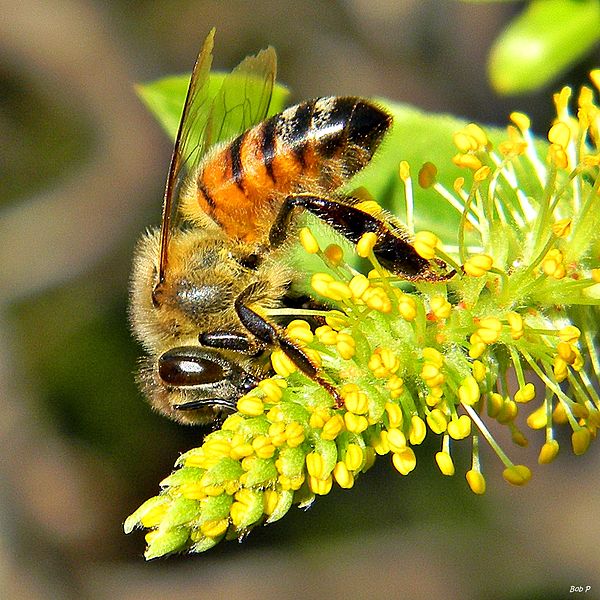
Such is the case in Minnesota, where the fate of bees is finding its way into the hearts and actions of concerned citizens.
600px-Honey_Bees_in_Willow_Trees_(8345531686)

Photo by Bob Peterson via Wikimedia Commons

Earlier this month, beekeepers Kristy Allen and Erin Rupp set out to mobilize a public meeting. Kristy and Erin are the founders of Beez Kneez, a Minneapolis bicycle honey-delivery and bee-education group, and they were among many area apiarists who lost hives due to fungicide last fall. The chemical cause was identified by University of Minnesota bee researcher Marla Spivak.

It was time to act.

The gals sent out invitations via social media—come one, come all—to attend a meeting that would address ways to help bolster the bees.

Nearly 150 people showed up on that frigid northern night, more than twice what the donated room at a local restaurant could hold.

“I was astonished,” said Representative Jean Wagenius, who came to talk legislation. “Something is going on.”

And that “something” is catching.

In 2013, Minnesota passed a bill directing its agriculture department to come up with new guidance for farmers on preserving pollinator habitat.

“And putting the needs of pollinators in every proposal is now required for projects funded by the Lessard-Sams Outdoor Heritage Council, which will use about $100 million this year to protect or restore 52,000 acres of Minnesota forests, wetlands, and prairies,” reported the Minneapolis Star Tribune.

Additional efforts in the state include the Environmental Trust Fund’s proposal to allocate $2.25 million for 10 projects related to pollinators as well as further research, a new Bee Discovery Center at the Landscape Arboretum, and a prairie butterfly breeding program at the Minnesota Zoo.

“It wasn’t until people understood the stark relationship to the food supply and the relationship to pesticides that the wave crested,” said Bill Becker, executive director of the Outdoor Heritage Council. “People poured forth with a desire to do things.”

Here’s a great little video by Beez Kneez showing some of the good work they’re doing:

It’s never too late for resolutions, so the question is …

What can you do to help bees in the coming year?

photo-of-the-day

Flower3