


Author Archives: maryjane

Harvest in the Hebrides

To celebrate the season of harvest, let’s get away to the magnificent moorlands of the Scottish Hebrides …

South_Uist

Photo by Tony Kinghorn via Wikimedia Commons

where the bracken is turning bronze
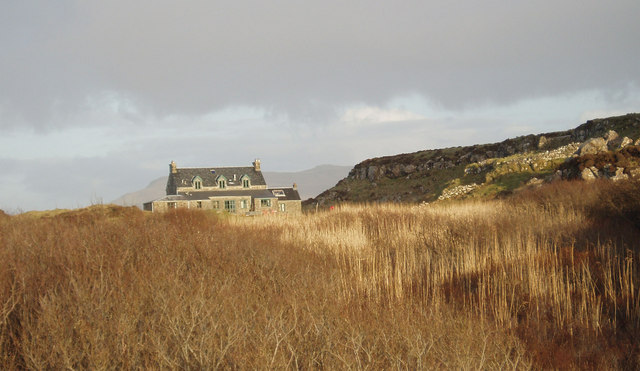
Colbhasa_Beag_1012642

Photo by Christine Howson via Wikimedia Commons

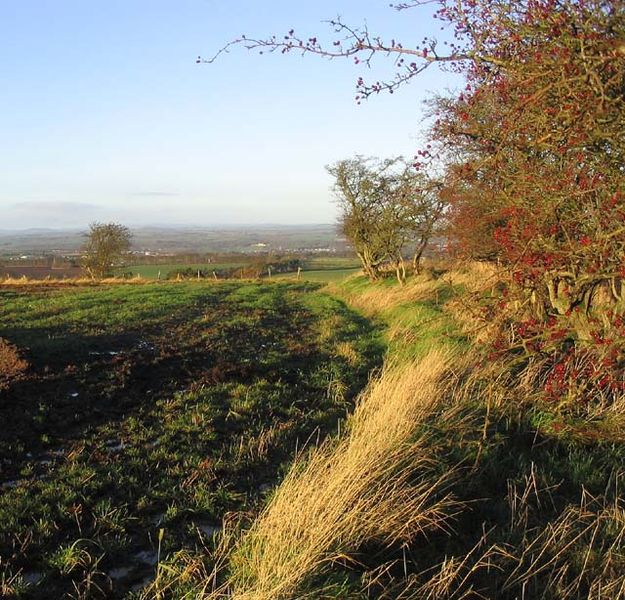
and ripe, red rowan berries decorate the hedgerows.
625px-Field_margin_-_geograph_org_uk_-_301512

Photo by Walter Baxter via Wikimedia Commons

It’s nearly time to collect the crops!

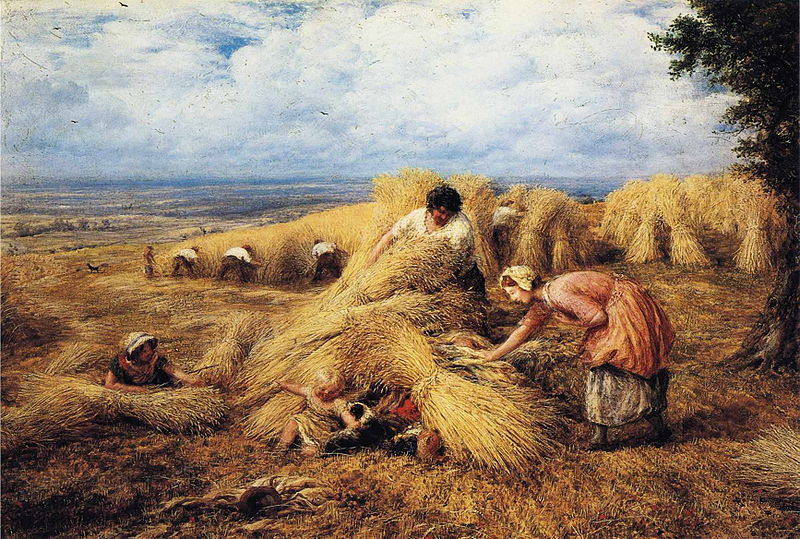
Once ashore, we’ll take a turn back in time to the harvests of old …
800px-John_Linnell_-_The_Harvest_Cradle

The Harvest Cradle by John Linnell, 1859, via Wikimedia Commons

Nineteenth century Scottish folklorist Alexander Carmichael painted a vivid picture of the traditional Hebridean harvest ceremony, which commenced yearly on Michaelmas, the feast of Saint Michael, on September 29:

“The day the people began to reap the corn was a day of commotion and ceremonial in the townland. The whole family repaired to the field dressed in their best attire to hail the God of the harvest. Laying his bonnet on the ground, the father of the family took up his sickle, and facing the sun, he cut a handful of corn. Putting the handful of corn three times sunwise round his head, the man raised the Iolach Buana, the reaping salutation. The whole family took up the strain and praised the God of the harvest, who gave them corn and bread, food and flocks, wool and clothing, health and strength, and peace and plenty.”

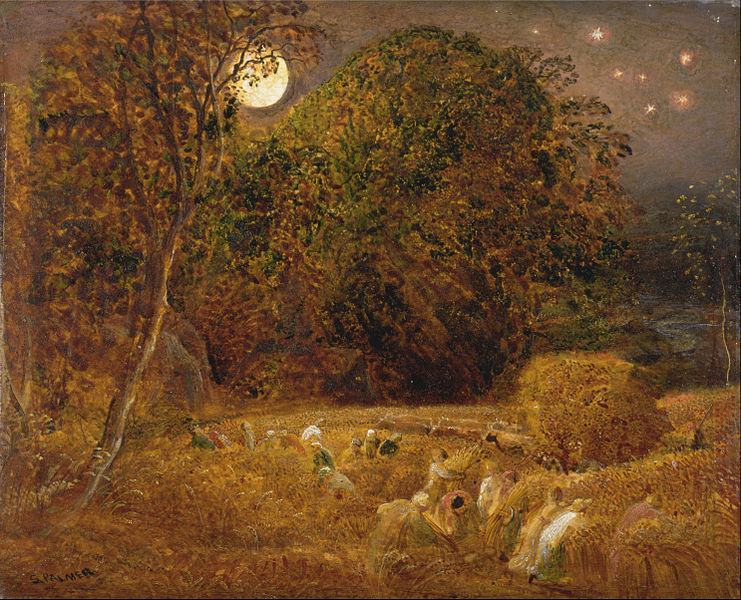
I can just imagine being a part of that celebratory scene, gussied up in linen and lace, and working well into the night by the light of a harvest moon …
741px-Samuel_Palmer_-_The_Harvest_Moon_-_Google_Art_Project

The Harvest Moon by Samuel Palmer, c. 1833, via Wikimedia Commons

A farmgirl fantasy!
gleaning_jpg!Blog

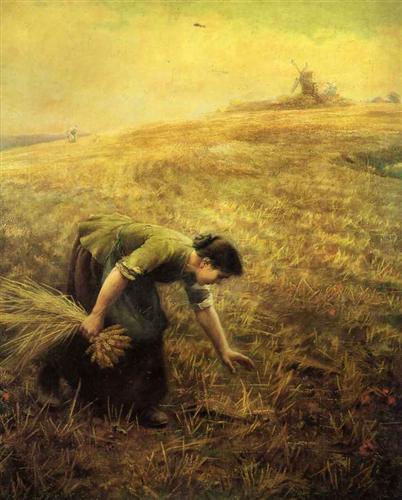
Gleaning by Arthur Hughes, 1832-1915, via Wikimedia Commons

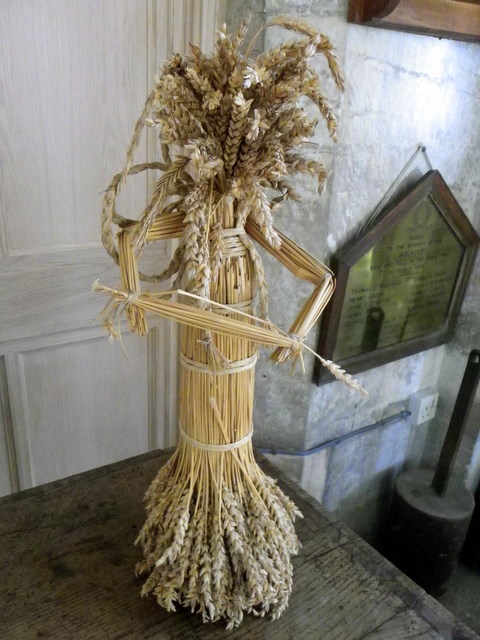
The “gleaning” at the end of the corn harvest, depicted in the painting above, was as much cause for celebration as the first cutting, and it had its own special ritual. When all the fields were harvested, a young woman would cut the last sheaf, which was considered the last refuge for the harvest spirit. The sheaf was then braided and shaped into a Corn Maiden (also called a Kirn Baby or Corn Dolly). The doll would grace the table at the harvest feast, where she was toasted merrily, and would then be hung with honor in a farmhouse kitchen or local church.
2125721_05a8092b

Photo of a Kirn Baby or Corn Dolly by Miss Steel via Geograph.org.uk

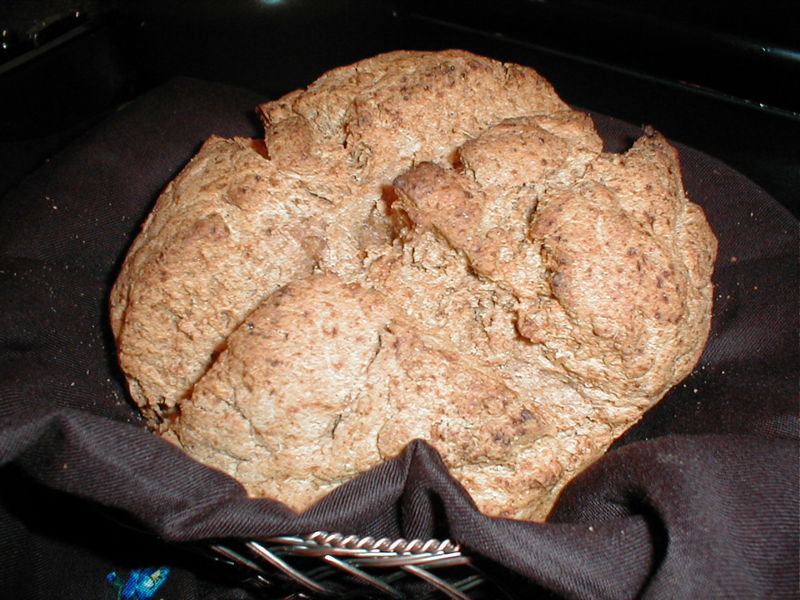
One of the special culinary centerpieces of this feast was struan bread, or Michael’s Bannock, made by combining all types of grain from the farm with butter, eggs, and sheep’s milk. The loaf was marked with a cross and baked on a stone over a fire of oak, rowan, and bramble wood. You can recreate traditional Scottish struan using the lovely recipe at LeeandJay.wordpress.com.
OLYMPUS DIGITAL CAMERA

Photo by Heather “Moria” via Wikimedia Commons

With our bellies full of bannock, we could settle here a while, don’t you think? Autumn is, after all, “a good time for staying.” Linger a bit upon this 11th century poem written by an unknown Celtic author, and you’ll see what I mean …

A good season for staying is autumn;
there is work then for everyone before the very short days.
Dappled fawns from among the hinds, the red clumps of the bracken shelter them;
stags run from the knolls at the belling of the deer-herd.
Sweet acorns in the wide woods, corn-stalks around cornfields over the expanse of brown earth.
There are thorn-bushes and prickly brambles by the midst of the ruined court;
the hard ground is covered with heavy fruit.
Hazel-nuts of good crop fall from the huge old trees on dykes.
Colley_Hill_-_geograph_org_uk_-_1573397

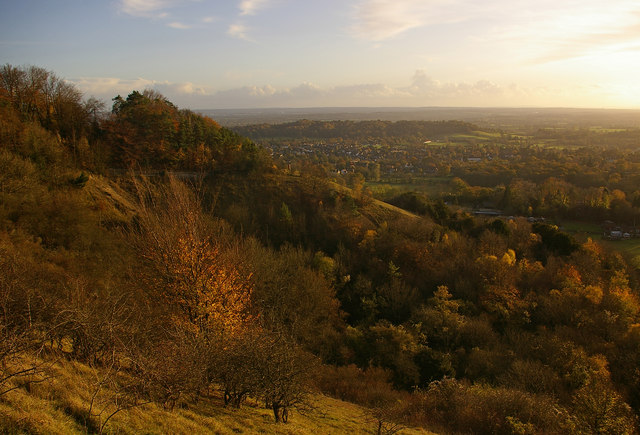
Photo by Ian Capper via Wikimedia Commons

Ah, well, the time has come—I must get back out outside, amongst my own fair fields. I’d love to hear how the harvest is coming along in your neck of the woods. Any thoughts of a hosting a harvest celebration?

Hear Ye!

Welcome New Sisters! (click for current roster)

Merit Badge Awardees (click for latest awards)

My featured Merit Badge Awardee of the Week is …Mary Jo Boyd!!!

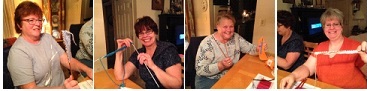
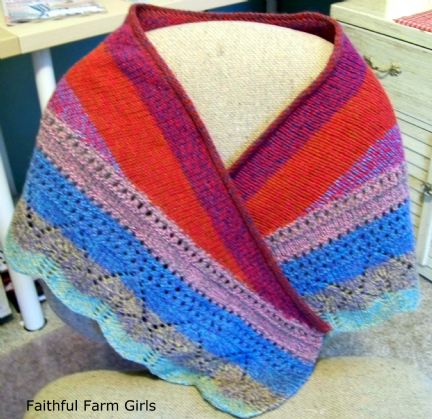
Mary Jo Boyd (Quiltsister413, #5559) has received a certificate of achievement in Stitching & Crafting for earning an Expert Level Knitting Merit Badge!

“While in Lincoln, NE for a business conference, my friend and I stopped in to the local yarn store and found an adorable shawl pattern that we both had to make. We purchased two skeins of Crazy yarn and got to work right away in our hotel room. It took me about a month, but I finished it.

I think it went well. The pattern was by far the most challenging one I have tried, but I enjoyed knitting a little each night and watching it grow. I got to use circular needles for the first time and found I really loved them. The edge called for an I-cord bind off which was completely new to me. Youtube videos are so helpful in these situations! I found several videos to help me through and it turned out very nice.

Shawl

I taught four ladies how to knit at our last Faithful Farm Girl meeting. Each of the ladies brought size 7 knitting needles and some practice yarn and I taught them how to tie a slip knot, do a long tail cast on, how to knit and how to purl. I also provided them with two patterns for knitting dishcloths and they are off and running…or is that knitting.

The fifth person I taught to knit is actually my friend and knitting teacher. I actually got to teach her two techniques I had learned that she didn’t know. How cool is that! I taught her the long tail cast on method and also a new way to add a new color or skein in the middle of your project. She now uses both new techniques and loves them!”

Learning to knit

photo-of-the-day

Farm_Romance-2754

Hey, dude …

Have you been a victim of this startling salutation—even though you’re a gal?! (No GUY in sight.) The first time it happened to me, I chuckled, thinking, “Oh my, this new generation is so … so … casual! Whatever happened to “Hello, ma’am,” or “Ms. Butters, may I …?”

But, according to Dictionary.com—an invaluable resource in my business, and one that has occasional fun tidbits about word usage—the term “dudes” has been around since 1883. In that year, the New-York Mirror described dudes as “tight-trousered, brief-coated, eye-glassed, fancy-vested, sharp-toed shod” gents in the Big Apple. And “duding up” meant to dress up in your fanciest finery.

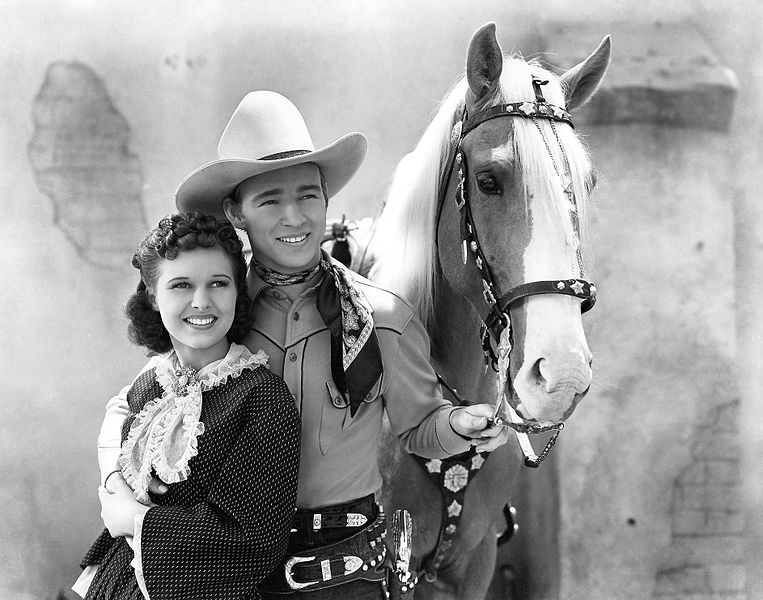
A few decades later, in the 1920s, the term “dude ranch” came into our lexicon, meaning a vacation ranch catering to “dudes” (translate: “city slickers”). You know, a vacation where you could wear your fanciest cowgirl-like garb and go out West where handsome cowboys actually worked from atop real horses.

763px-Lynne_Roberts-Roy_Rogers_in_Billy_the_Kid_Returns

Lynne Roberts & Roy Rogers in Billy the Kid Returns via Wikimedia Commons

Fast-forward to the ever-so-casual 2000s, where “dude” now has an official entry in the dictionary, simply described as “a general term of address used to a man, woman, or group.” And lest you think “dude” was previously a gender-specific term only for “dudes,” as we baby-boomers sometimes called members of the male gender, the term has apparently always had a female counterpart. Dudette, Valley girls? Nope, that would be “dudine,” as appeared in Stories of a Country Doctor, by Willis Percival King in 1891: “She was between 60 and 70 years of age at this time and was as pronounced a specimen of the type dudine as I ever saw.”

Okay dude … let’s get on our fancy duds, pony up, and get to one of those ranches where handsome cowboys ride the range. You in? Hey, speaking of dudines, today my daughter, Megan, turns 35. Meggie dude, you are THE dudette, duder motor skooter!!!!! I love you madly. Seriously. Madly. In. Love w/YOU.

photo-of-the-day

Farm_Romance-2724

photo-of-the-day

Farm_Romance-2871

Syllabub

While working on a recent issue of our magazine, we ran across the word “syllabub.” No, not like, “Hey bully boy bubba, how many syllabulls do you think this word has?” but more like “My favorite part of the Thanksgiving meal is the traditional syllabub.”

siluh-buhb

noun

From the Oxford English Dictionary:
A drink or dish made of milk (freq. as drawn from the cow) or cream, curdled by the admixture of wine, cider, or other acid, and often sweetened and flavoured.

A later variation, known as an Everlasting Syllabub, adds a stabilizer such as gelatin or corn starch.

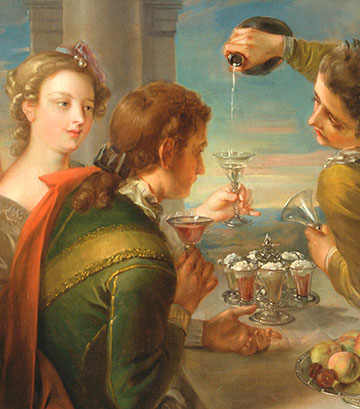
Philippe_Mercier_-_The_Sense_of_Taste_-_Google_Art_Project

detail, “The Sense of Taste” by Philip Mercier (circa 1689-1760)

“Lemon Syllabub”
from The Experienced English Housekeeper, by Elizabeth Raffald, London 1784

Put a pint of cream to a pint of white wine, then rub a quarter of a pound of loaf sugar upon the out rind of two lemons, till you have got out all the essence, then put the sugar to the cream, and squeeze in the juice of both lemons, let it stand for two hours, then mill them with a chocolate mill, to raise the froth, and take it off with a spoon as it rises, or it will make it heavy, lay it upon a hair sieve to drain, then fill your glasses with the remainder, and lay on the froth as high as you can, let them stand all night and they will be clear at the bottom.~

Wine pudding? Not so sure about that. And I’ve mislaid my hair sieve …

But leave it to my favorite British cook, Nigella Lawson, to provide us with a very yummy-sounding modern adaptation, Turkish Delight Syllabub, that uses orange liqueur instead, topped with pistachios. That’s something I could wrap my spoon around! Now, if only I can get Sally O’Malley to draw me a picture and figure out what an admixture is!

syllabub

Nigella Lawson, Turkish Delight Syllabub

photo-of-the-day

Farm_Romance-2743

photo-of-the-day

Farm_Romance-2734

Small gestures, BIG changes

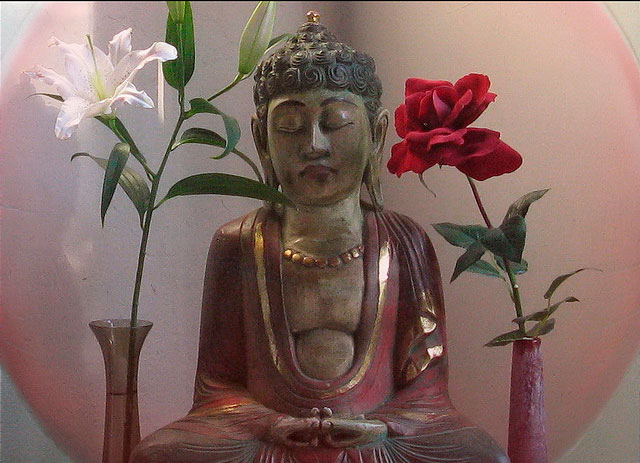
A simple, little Buddha statue seems to be spreading a big message of peace in an Oakland, California, neighborhood.

Buddha3

Photo by Hartwig HKD via Flickr

One resident, who’s not a Buddhist or even affiliated with any other religion, placed a small, stone Buddha at an Ace Hardware store in an Oakland residential area that was plagued by crime, drug-dealing, prostitution, and littering. He was merely hoping that the calm, benevolent presence of the statue would somehow bring a glimmer of peace to the neighborhood. Before long, offerings of flowers, food, and candles appeared at the site. Then, Vietnamese women from the neighborhood began to meet there for morning prayers. “And the neighborhood changed. People stopped dumping garbage. They stopped vandalizing walls with graffiti. And the drug dealers stopped using that area to deal. The prostitutes went away,” says the San Francisco Chronicle. Police crime statistics for the area actually show an 82 percent drop in crime since the women began their morning prayers.

Whether you call it the power of prayer, the power of positive thinking, or the power of peace, this one little statue and this one little gesture has made a big difference in one little neighborhood.

Read the whole story here.