








Doy-gee!
While this may sound like some sort of neologism meant to convey, say, surprise or delight, it is actually the pronunciation of:
Duodji.
Oh, gee …
Don’t worry if you’re coming up empty on definitions because duodji isn’t an English word–not even close. It actually hails from a remote group of nomadic people called the Sámi who herd reindeer across the far northern reaches of Scandinavia.
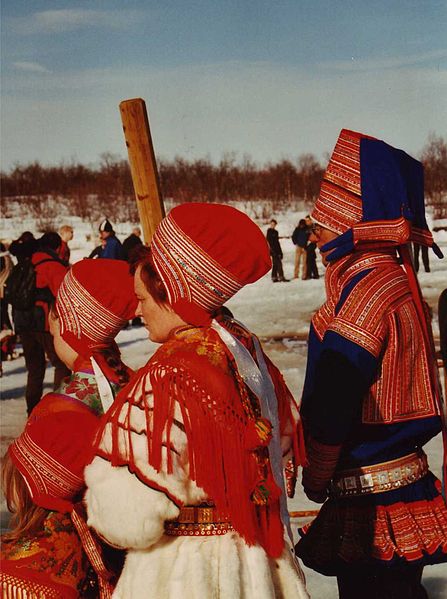
Photo of Sami family at spring (Easter) celebration by Mortsan via Wikimedia Commons
Duodji refers to any number of handcrafted items made by the Sámi that are both aesthetically beautiful and useful (clothing, accessories, household items, and tools). Traditionally, duodji crafts were divided into men’s and women’s work. Men used mostly wood and antlers as well as other bones from reindeer when crafting items like this salt cellar:
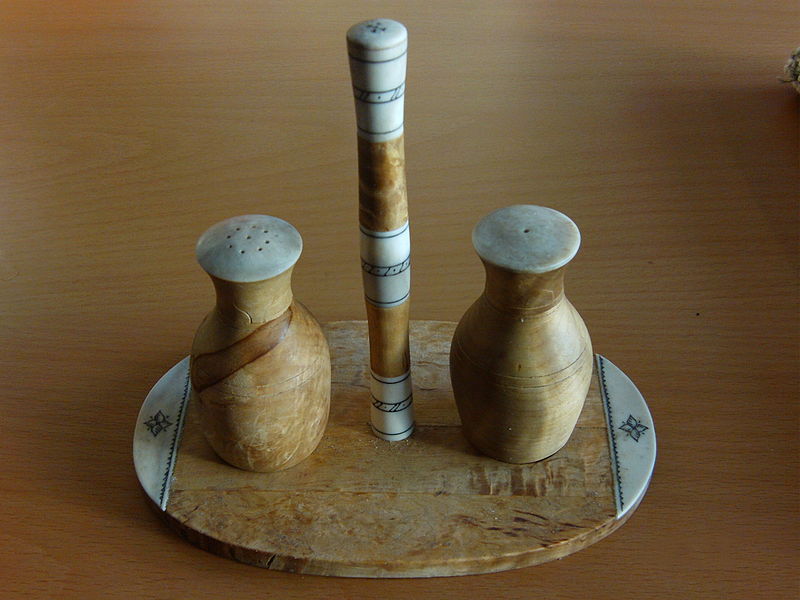
Photo by Christopher Forster via Wikimedia Commons
Women incorporated leather and fur in elaborately stitched items like these marvelous mittens:
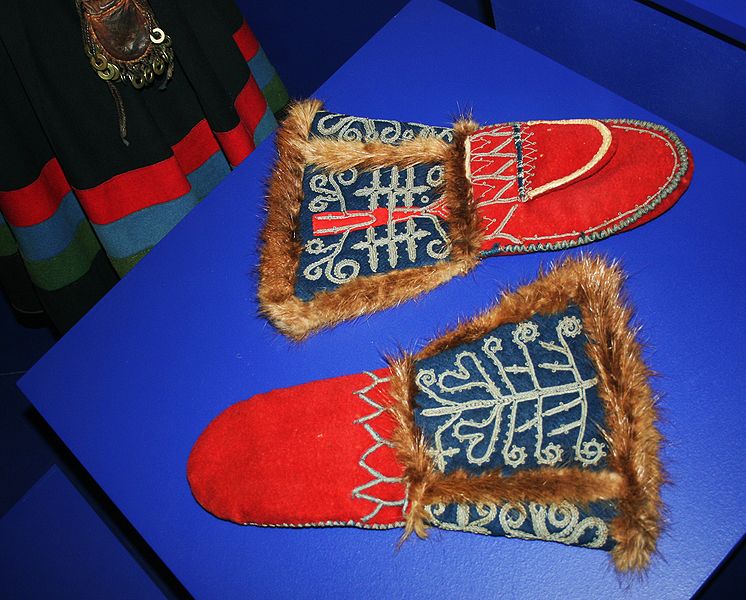
Photo by Thorguds, SaamiBlog.blogspot.com via Wikimedia Commons
Traditional colors incorporated in duodji are red, green, blue and yellow:
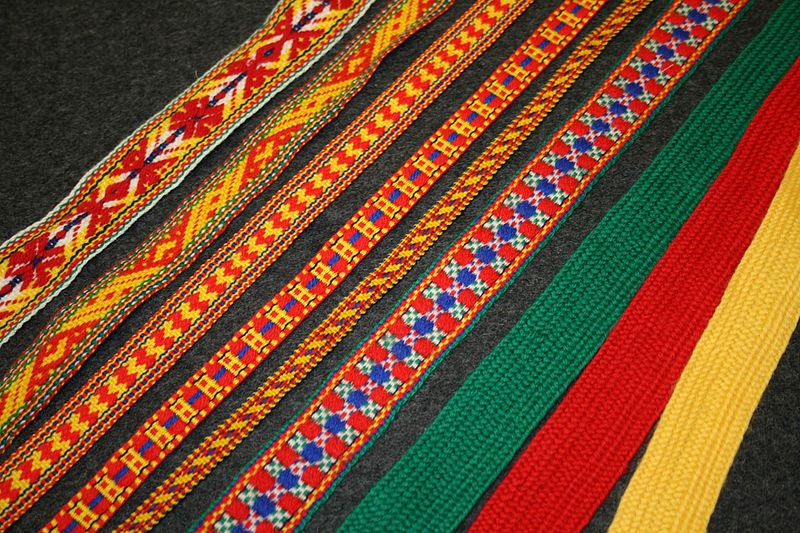
Photo by Duodjiinfo via Wikimedia Commons
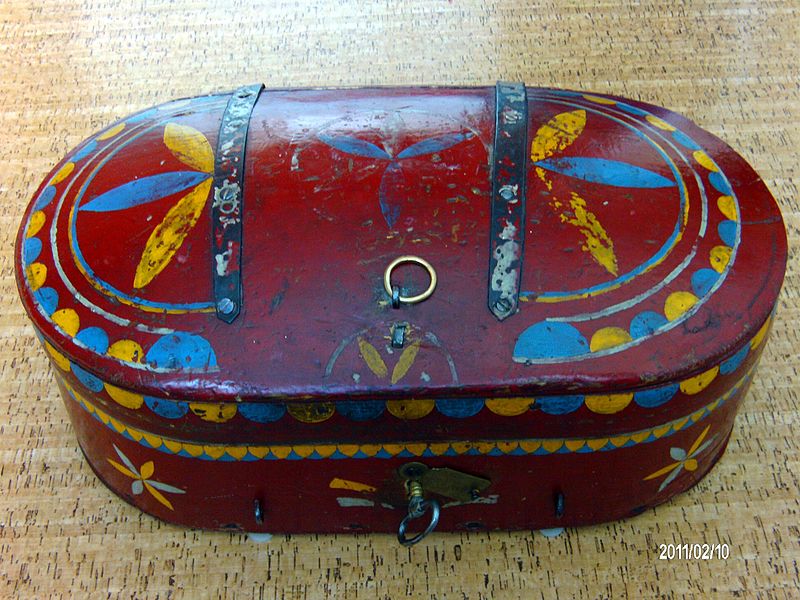
Photo by Christopher Forster via Wikimedia Commons
“Duodji represents cultural continuity with our ancestors,” explains Ellen Marie Jensen, author of We Stopped Forgetting. “There are creative and functional adaptations over time, and the individual duojar has room for individual creative expression. Duodji is both functional and beautiful.”
Doy-gee, I surely agree.