Author Archives: maryjane

2 cents seed fund

As wild as the winter has been across much of the country, you may still feel like you’re in deep-freeze mode, but small beacons of hope are beginning to sprout in mailboxes hither and yon …

seed-catalogs

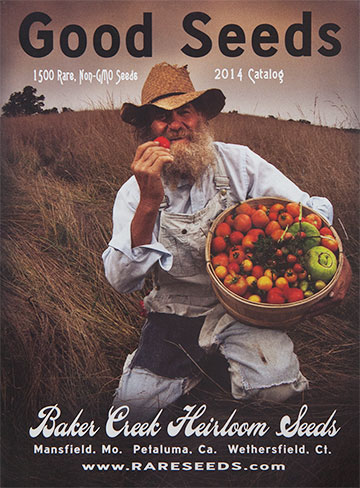
That’s right—seed catalogs are arriving again, as faithful as Spring herself.

Who doesn’t fancy these powerful portents of the season to come (if in doubt, read my romantic ramblings on the subject). The glowing cover of a good catalog is something a soil-starved farmgirl can hang her hope on!

seed_cover-4414

Feeling a little warmer already, aren’t you?

Alrighty then, let’s not waste another minute …

If you’re toying with the idea of planting an organic plot this year but are wincing at the thought of seed prices, consider applying NOW for assistance from the new Seed Fund Program sponsored by the Rodale Institute and Amy’s Kitchen.

Time is short, so don’t wait for the snow to melt!

What is it?

The Seed Fund partnership is an expansion of Rodale’s Your 2 Cents program, which unites producers, consumers, researchers, and educators to launch the next generation of organic farmers. The goal of the fund is to help new and transitioning organic farmers buy the certified organic seed they need for the 2014 growing season.

Who qualifies?

First-time and transitioning organic farmers.

How do I apply?

Get the details here.

When is the application deadline?

March 1, 2014.

photo-of-the-day

farm_romance-5616

photo-of-the-day

farm_romance-6117

photo-of-the-day

farm_romance-3953

Make Do and Mend

Do the words

clothes rationing

send a shudder down your spine?

Before you run off to lock your closet, let me assure you that this World War II practice is not being reinstated.

Well, not yet, anyway.

But you might find (once the initial shock of the notion has faded) that you are pondering its practicality.

Hmmm …
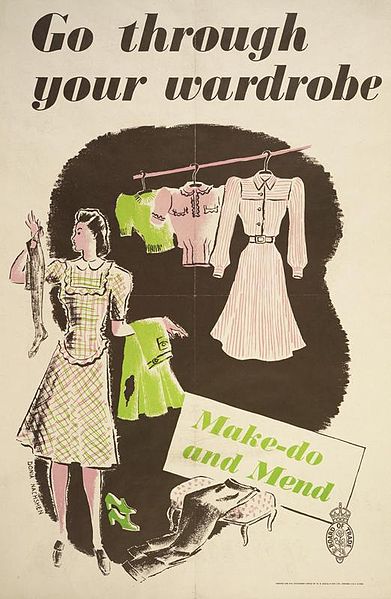
Go_Through_Your_Wardrobe_-_Make-do_and_Mend_Art_IWMPST4773

Image courtesy of the Board of Trade, artist Donia Nachshen, Her Majesty’s Stationery Office via Wikimedia Commons

Clothes rationing was in fashion (euphemistically speaking) in the U.K. from 1941 to 1949, when manufactured commodities were limited. At first, each adult in the country received an annual allotment of 60 coupons, but as time went on, the number was reduced to 48. Kids were given an extra 10 coupons each to account for growth.
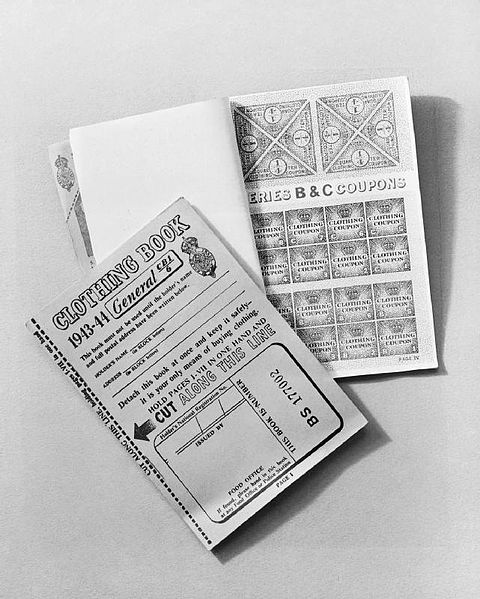
480px-Clothing_coupon_books_as_issued_to_British_civilians_during_the_Second_World_War__D14000

Image courtesy of Ministry of Information Photo Division Photographer via Wikimedia Commons

According to the sustainable fashion hub Ecouterre, “You had to be judicious in your selections; a petticoat or slip ‘cost’ three coupons, a woolen dress eleven, and a men’s overcoat an extravagant thirteen. Even a pair of socks required at least one coupon.”

The kicker was that a coupon didn’t actually pay for anything—it simply represented permission to purchase a certain quantity with one’s own limited finances.
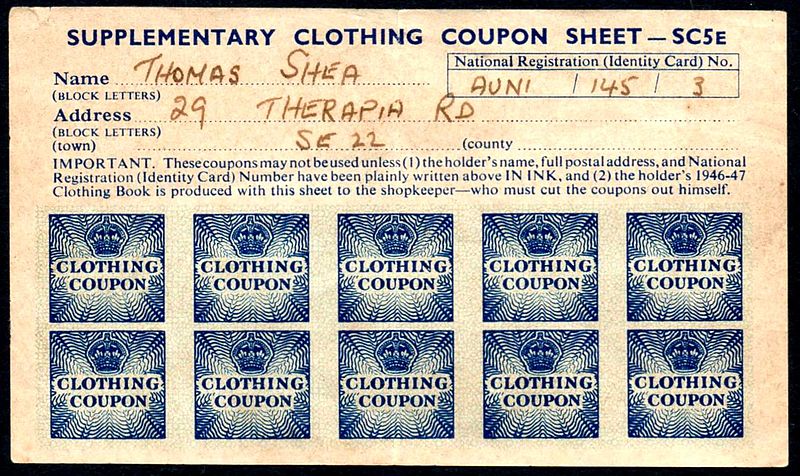
800px-1946_British_clothing_ration_coupons

Image courtesy of the British government via Wikimedia Commons

Necessity, which we credit as the Mother of Invention, spurred a national movement of Make Do and Mend, of which my grandmother pitched in full bore. Men’s suits became children’s coats (I was the recipient of one of them) and worn trousers became vests. You see, my grandmother was of the era in which she showed up for work every day (after her children were raised) in a fancy hat and white gloves (required for her job) as a creator of sewing patterns in Denver, Colorado.
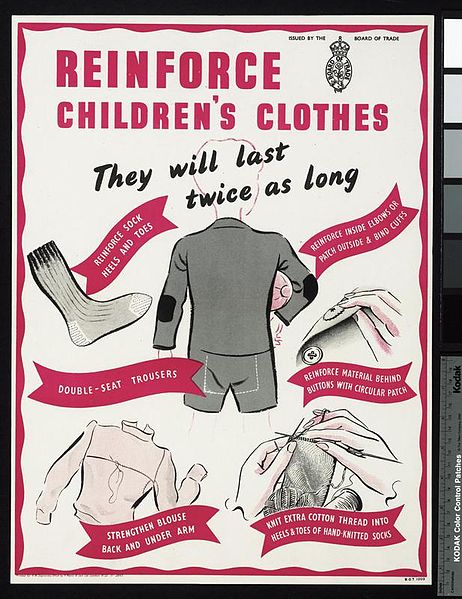
Reinforce_Children's_Clothes_Art_IWMPST8294

Image courtesy of Board of Trade, H Manly and Son Ltd, London N22, and Her Majesty’s Stationery Office via Wikimedia Commons

To advocate the idea of a “substitution and conversion” economy, the Ministry of Supply produced the following video clip that extolled the virtues of upcycling items—a patchwork dressing gown fashioned from fabric scraps and a shift sewn from old trousers.

“For the ladies, you may be reassured that all garments made in ‘make do and mend’ are entirely exclusive,” the narrator quips. “To the men, lock up your favorite old clothes before you leave home in the morning!”

So, you see, there is a grain of genuine sensibility here. After all, many of us live the “make do and mend” mantra as it is.

Would rationing be so ludicrous?

“The political situation may be less dire today, but scarcity, coupled with unfettered consumption, continues to be a problem,” asserts Ecouterre. “Inhumane demands, lax workplace standards, and routine abuse are the result of too much expendable income and too little social or moral accountability to rein in our impulses. Shopping has become something we do out of habit, boredom, or because we get a buzz from acquisition.”

I get waaaaay more revved about repurposing, how about you? And my favorite way to repurpose the wool from a man’s suit is to make a crazy quilt, held together using a variety of different embroidery stitches. Love the look! I did turn an old green wool army jacket into a purse once. But nothing I’ve done compares to the volume of re-use projects my grandmother and mother accomplished.
photo-of-the-day


farm_romance-6856

Nozomi Project

I love the ability of womankind to transform tragedy into beauty, connectedness, and hope.

This is exactly what the women of The Nozomi Project are accomplishing in the wake of Japan’s devastating 2011 tsunami.

Their aim?

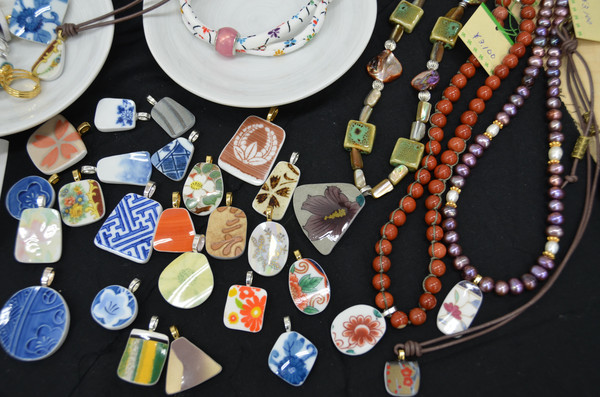
To train women and grandmothers who have suffered myriad effects of the disaster to craft beautiful, one-of-a kind jewelry from ceramic shards found among the rubble.

combo_12d9e5ec-5cee-43de-9fa6-2c60d691fcfc_grande

Photo courtesy of NozomiProject.com

“Nozomi,” which means hope in Japanese, is teaching self-sustaining skills to women while providing them a safe haven where they may gather with others who have shared traumatizing experiences.

“Each of the women working with The Nozomi Project has created a collection of her own to honor a loved one, featuring shards of the stunning pottery that Japan is so famous for,” writes Kimberley Mok. “Meticulously crafted in a setting of collective healing and hope, The Nozomi Project is a wonderful example of long-term aid that takes into account of wounds that may take longer to heal than re-building mere buildings.”


photo-of-the-day

farm_romance-5514

Introvert Video

This one’s for the club.

What club?

I’m hailing that group of quietly connected, loosely knit, and elegantly empowered introverts who clamored

(in their own understated way)

about my post last year titled “A wise woman once said … nothing.”

I was surprised and delighted by the response—how incredibly affirming!

So many of us, it seems, feel that our personality characteristics (like the deep need for alone time) are peculiar quirks, unique and, well … rather odd.

Not so.

Not so at all.

Hence my use of the term “club” (no commitment required).

If you piped up about that post, or just silently listened in, I think you will appreciate this video created by the RSA (Royal Society for the encouragement of Arts, Manufactures, and Commerce) to illustrate points made by Susan Cain, author of Quiet: The Power of Introverts in a World that Can’t Stop Talking.

Enjoy!


photo-of-the-day

farm_romance-5543