Here’s where you can count on me for a quick pick-me-up post from one of my 12 categories, penned in honor of us girls and that letter of the alphabet we’ve all laid claim to, G. My goal is to gladden your heart and add some glisten to your life.
Imagine going to an antique store and purchasing a box of old photographs, then spending the next 50 years trying to figure out who the photographer and the people depicted in the photographs were.
Douglas Keister, photographer and author of 42 critically acclaimed books, did just that. I first met Doug when I asked to use a couple of his photos in my third book, MaryJane’s Outpost. Doug had just published one of my favorite books about travel trailers, Teardrops and Tiny Trailers, with Gibbs Smith (also my publisher for Glamping with MaryJane and Milk Cow Kitchen).
In 1965, Doug was a junior in high school in Lincoln, Nebraska, and already a budding photographer. He acquired a stack of 280 black and white 5×7 glass negatives from a friend who had run an ad looking for area antiques. Doug proceeded to set up a makeshift darkroom in his parents’ basement to develop and print the negatives. He discovered an important part of history when he saw that most of the photographs were portraits of African Americans in the early part of the 20th century.
“Five decades of research finally revealed that the photographs were taken by an African American photographer a century ago in Lincoln, Nebraska. The variety of images reveals a vibrant community and, more importantly, an ennobled and hopeful African American population,” says Doug. The importance of these images has been recognized by the Smithsonian Institution’s new National Museum of African American History and Culture, which now has 60 prints from the negatives in its permanent collection.
Doug has made a 25-minute video, Shadows on Glass, about his discoveries that shows many of the photographs, fills in the blanks about their origins, and paints a fascinating picture of the lives of the African American community in Lincoln 100 years ago.
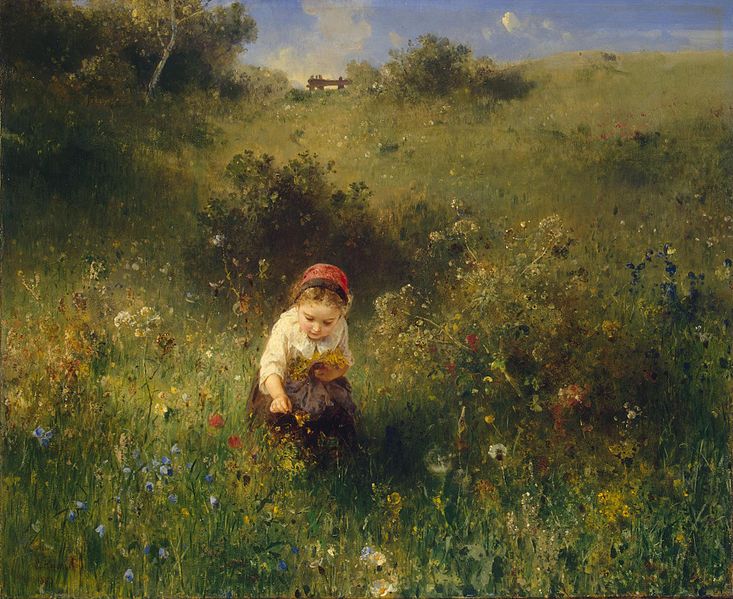
This enchanting scene, painted over a century ago by a gent named Ludwig Knauss, instantly leaves me feeling afflated to begin planning for planting and picking flowers, lots and lots of flowers …
Image courtesy of Wikimedia Commons
Afflated (uh-FLEY-tid): having inspiration; inspired
What flower afflated you to start dreaming of spring?
Here’s a short video that answers that question—the most oft-asked cheese question on the Internet—and also tells us that the USDA regulates the sizes of those holes (who knew?)!
In the Dec/Jan issue of MaryJanesFarm, “Home for the Holidays,” we taught you how to make “magic pillowcases.”
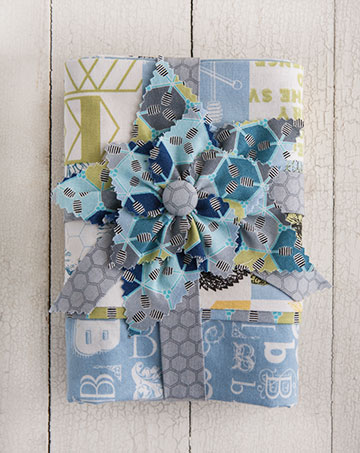
Now, you can win a set of the pillowcases featured in that article, made from my Bee My Honey fabric collection. The body fabric is my “Colony Hum” print, the cuff fabric is the “Honey” pattern in “Gold” color, and the trim fabric is “Multi” in “Grey.” The giveaway includes two standard-size pillowcases and a pretty, pinked-edged poinsettia bow made from another of my collection’s patterns.
To win, tell me your pet name for your favorite honey (guy or gal) in the comments section below. We’ll put your answers in a pillowcase, shake them up, and draw one lucky winner. Come back sometime next week to see who wins.
My featured Merit Badge Awardee of the Week is … Suzanne Holland!!!
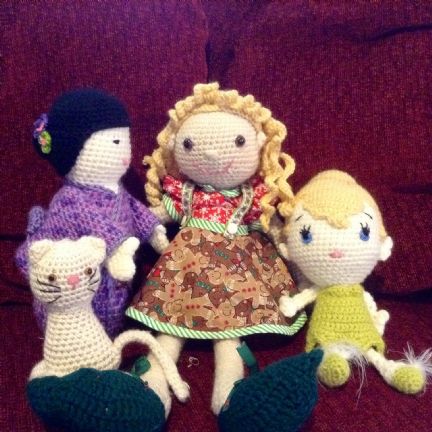
Suzanne Holland (#828) has received a certificate of achievement in Stitching & Crafting for earning an Intermediate Level Crochet Merit Badge!
“My daughters wanted me to learn how to make amigurumi dolls for them. So I purchased a few patterns and got busy. I enjoyed working with my daughters, spending time with them, choosing yarns to make each doll just right. So far, I have made four dolls of different sizes.
On each doll, I have been able to spend time with my daughters as I work on their dolls, letting them practice on stitches and make choices. They even helped me stuff them. The dolls made were a Geisha Girl, a Kitty, Tinkerbell, and an Elf.”
5% of profits will benefit www.firstbook.org, a non-profit that provides new books to children from low-income families throughout the U.S. and Canada.
Here’s how:
MaryJane will post a photo and a description of a prop and its cost along with a few details as to its condition here: https://shop.maryjanesfarm.org/MaryJanesCurations. It’s a playful way to be the new owner of a little bit of farm herstory.